Recovery52 – Year 2 Anniversary – A Photo Project: Two Years On

“Choosing sobriety opens the door to a journey of discovery: of self, purpose, and true freedom.”
Two years. It feels surreal to type those words, but here I am: two years sober. When I chose sobriety, I thought I was simply choosing to stop drinking. What I didn't realize was that I was opening the door to something much bigger—a journey of discovery: of self, purpose, and true freedom.
In the early days, the focus was on survival—making it through one day, one hour, one minute at a time. But as the days turned into weeks, and the weeks into months, I began to feel alive again. The fog lifted, and I started to see myself more clearly. For so long, I had used alcohol to dull the edges, to blur the parts of myself I didn’t want to confront. Sobriety forced me to face those parts head-on. It wasn’t easy. It was tough at times. But in doing so, I discovered resilience I didn’t know I had. I began to understand who I was, not through the distorted lens of alcohol, but as I truly am.
With that understanding came purpose. Recovery isn’t just about abstaining; it’s about creating. Without the distraction of alcohol, I had the time and mental clarity to ask myself: What do I want my life to stand for? What do I want to build? For me, that answer came in the form of creativity and connection. Whether it’s capturing a fleeting moment through my camera lens or writing reflections like this one, I’ve found outlets that bring me joy and fulfillment. More importantly, they allow me to share my journey and, hopefully, inspire others along the way.
And then there’s freedom. True freedom. Sobriety has given me something I could never find at the bottom of a glass: peace. No longer am I chained to the cycles of shame and regret. No longer do I wake up wondering what I said, what I did, or who I hurt. I am free to make choices that align with my values. Free to live with integrity. Free to dream big and chase those dreams with a clear head and an open heart.
A crucial truth I’ve learned is this: a person has to want sobriety for themselves. No one can make them get sober. The decision has to come from within, driven by their own desire to change and grow. Without that internal commitment, the journey cannot begin. That being said, I could not have done this without the compassion and support of family, friends, and loved ones.
Two years ago, I chose sobriety. Today, I celebrate everything that choice has given me. To anyone reading this who is on their own journey—whether you’re just beginning or well along the path—know this: choosing sobriety isn’t just choosing to stop. It’s choosing to start. To start discovering who you are, what you’re capable of, and the freedom that comes from living a life true to yourself. Here’s to the journey.
If my writings in this photography project can benefit someone in their recovery, I’m proud to have shared them.
Recovery52 – Week 51 – IntentRecovery52 – Week 51 – Intent

“Always stay humble and kind.”
— Tim McGraw
In the fall of 2022, I experienced a series of relapses with alcohol. In mid-December, a close friend shared an observation that hit me hard: I had no plan and no goals. She asked what I wanted in life. I had no answer—no rebuttal, no excuses. Her question left me shaken, but at the time I wasn’t ready to face it or do the deeper work required.
I stumbled again just before the end of the year—a hard lapse, a blackout binge. On January 1st of 2023, I woke up miserable, hungover, ashamed, and exhausted by the pattern I kept repeating. That relapse didn’t help me answer what I wanted in life. Instead, as I sobered up, a much clearer question surfaced: “What do I not want in life?”
The answer was immediate: I didn’t want to continue being who I had been. I didn’t want a life drained by drinking. I didn’t want to keep hurting myself and others. I didn’t want to keep wasting time, energy, or meaning. Something had to end—and something had to begin.
I’ve had stretches of sobriety before, some longer than a year, but those were stretches of abstinence, not recovery. Removing alcohol brought short-term improvement, yes, but I didn’t engage deeply with self-awareness. I didn’t examine the roots of my drinking. I didn’t explore my adverse childhood experiences or challenge the longstanding fears and beliefs connected to them. I was simply the same old me—just without the alcohol.
Throughout this project, I’ve written about developing healthy routines—mindfulness, journaling, movement—and about finding motivation not just to stay sober but to truly recover. I no longer want numbness. I no longer want escape. I no longer want the false comfort alcohol once provided. I’ve moved beyond cravings and urges. I’ve made changes in thinking and behavior that give me pride, confidence, and excitement about the path ahead.
There are four key differences in this recovery effort:
· The questions asked by my friend—“Who do I want to be? What do I want to become?”—became foundational. I want to grow into someone humble and kind.
· This time, I made my commitment to recovery known. I’ve been open with others instead of attempting sobriety in silence. Making the promise public keeps me accountable and highlights the importance of relationships.
· I worked consistently with a therapist for several months and was fully honest throughout the process.
· This photography project has kept me committed week after week. Accountability, creative expression, self-analysis, learning, and reflection have supported my recovery in ways I could not have predicted.
I’m not “recovered.” I still slip into negative thinking. I still procrastinate or distract myself when I don’t want to face responsibilities. I still struggle with trust—trust in myself and trust in others. I know there is more work ahead. But this time, I truly believe I can stay the course. I can grow forward. I can live with intent—being humble and kind.
(Next week will be the final post of this project. I may continue to write occasionally, but I will also shift attention toward a new photography project not centered on recovery.)
Recovery52 – Week 49 – Trinkets, Tokens, & Talismans
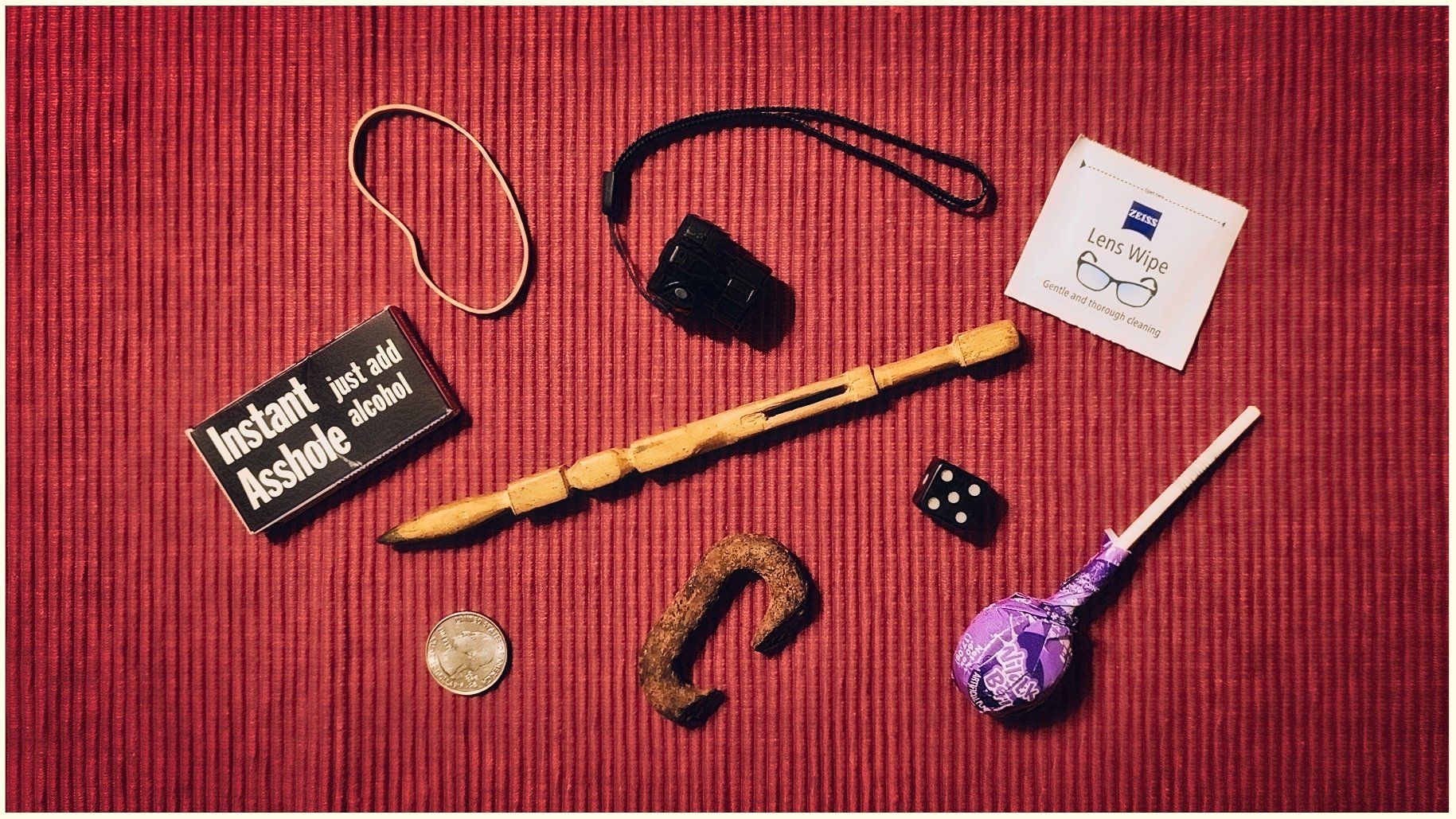
“Your mind is your invisible talisman. The letters PMA (positive mental attitude) are emblazoned on one side, and NMA (negative mental attitude) on the other. These are powerful forces.”
— W. Clement Stone
I am approaching a full year of complete abstinence from alcohol—nearly twelve months not just of sobriety, but of genuine, intentional recovery. Christmas of 2023 has passed, and I’m proud to say I moved through the holiday season with clear eyes and a steady spirit. No urges, no cravings. Instead, I recognized the people, places, and situations that once would have triggered escape or celebration, and I knew—fully—that I was in control of my thoughts, feelings, and behavior. So yes… yay for me.
This week’s reflection is about a small but meaningful part of my recovery: the growing collection of physical reminders that encourage me forward. Early in the year, during a counseling session, I shared with my therapist an idea sparked by an object I had found in a box from my past—something I had carved as a child with my first pocketknife. That simple piece of wood stirred memories of early creativity, long overshadowed by my years of substance use. With my therapist’s encouragement, I kept it visible on my desk during journaling and mindfulness practice.
Over time, I’ve gathered other objects that spark insight, symbolize lessons, or remind me of the journey I’m on. Here is my small collection—and the meaning each item holds:
· Wood Carving: A reminder of my early creative spirit—proof that creativity is part of who I’ve always been.
· A*Hole Gum: Picked up during an earlier recovery attempt as a joke; now a blunt reminder of truths I once avoided.
· Toy Camera: A symbol of my current creative passion—to see, capture, and share the beauty in the world.
· Dice: A reminder of life’s randomness. Some events we control, some we don’t—what matters is how we respond.
· Coin: A symbol of choice. Every action is a decision. Even not choosing is a choice.
· Chain Link: A broken, rusty link representing the chains of trauma and addiction that once bound me.
· Rubber Band: A symbol of flexibility—staying open to possibility instead of remaining trapped in rigid thinking.
· Lens Cleaner: A symbol of clarity—seeing the world, and myself, without the filters of fear or limiting beliefs.
· Sucker: A reminder that simple pleasures are fine. A piece of candy is okay—but I will never again reach for the poison of alcohol.
In the photo associated with this post, the items are laid out clearly for the viewer. Normally, they sit together in a small container on the edge of my desk. When journaling or reflecting, I sometimes glance at them and feel old memories rising or new ideas forming. These items carry no spiritual or ritual meaning—they are simply objects. But for me, they are powerful reminders of sobriety, growth, and the choices I make daily.
Next week, I’ll move safely through New Year’s and reach the one-year mark of true, continuous recovery. I feel confident. I feel steady. And I look forward to writing that post.
Recovery52 – Week 48 – Praise & Apologies
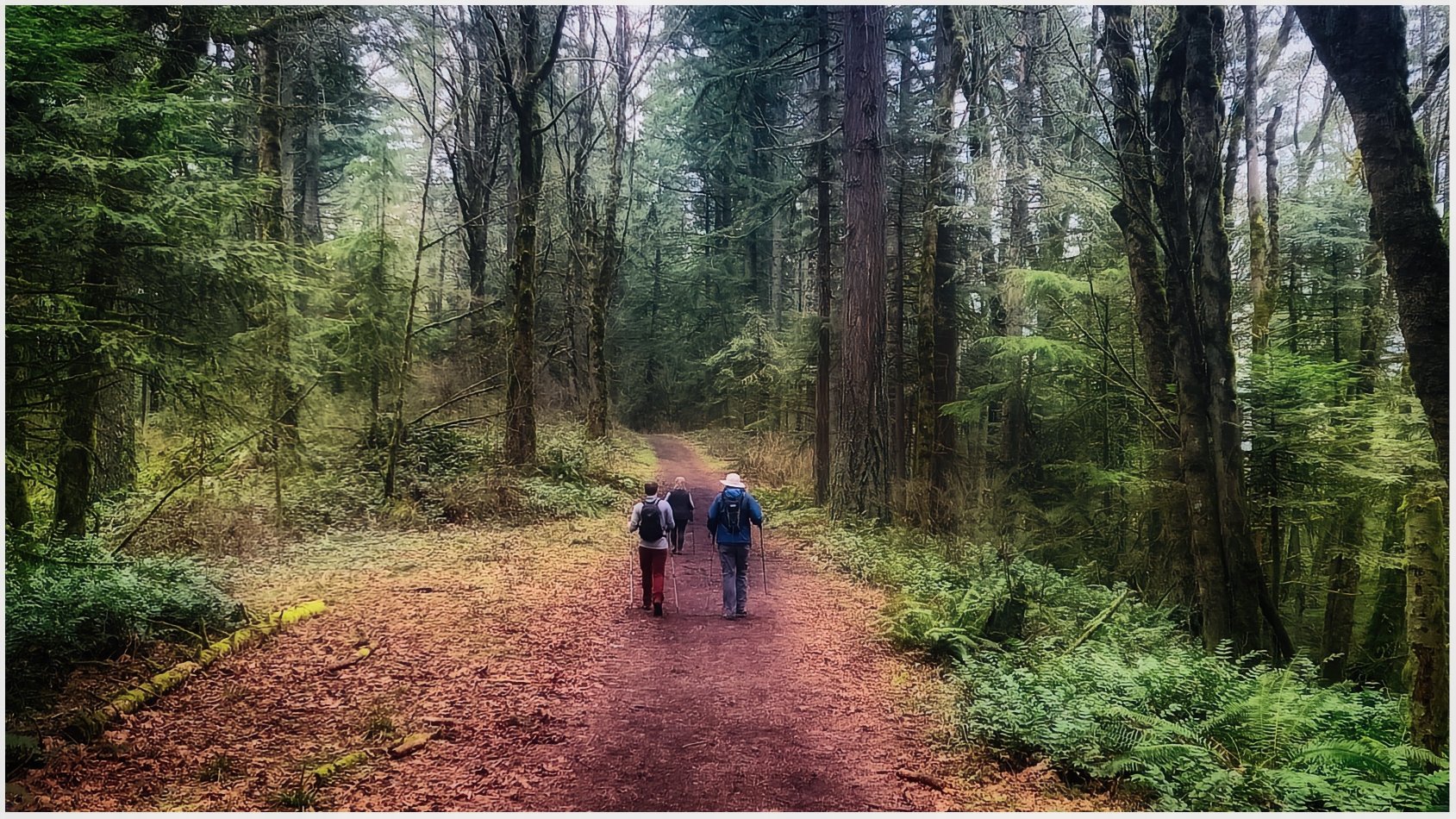
“Apologies aren’t meant to change the past, they are meant to change the future.”
— Kevin Hancock
Early in this project, while talking with a close friend about the emotional and physical traumas of my childhood, I shared a vow I made long before I had the words for it: I would never hit a woman or harm a child. Given what I had witnessed and endured, this vow felt like a core promise—a line I would never cross.
He responded with something that stayed with me: “You broke the cycle. You didn’t repeat the pattern.”
He was right. I take genuine pride in that. I am proud of the vow I made, and proud that I lived by it. But there is another side to the story. My adverse childhood experiences—and the vow not to become what I witnessed—pushed the pendulum in the opposite direction. In trying to protect the feelings of others, I avoided honesty when honesty was needed. To avoid emotional discomfort in myself, I numbed, hid, and shut down. And by doing so, I caused harm—not through violence, but through absence, dishonesty, withdrawal, and emotional unavailability.
My emotional immaturity and my habit of retreating from difficult feelings kept me from being fully present as a father, partner, and friend. My worldview often became cynical, dark, and closed. I put distance between myself and the people who cared about me, missing opportunities for connection, growth, and possibility.
So here I am now, recognizing that apologies are not just appropriate—they are necessary. I offer apologies to anyone who suffered as a result of my choices: missed commitments, poor decisions, emotional distance, and the failures in sobriety that pulled others into my struggles. My apologies extend to everyone affected by my addiction and avoidance. (For some, this echoes the spirit of Step Five in AA.)
But those closest to me—the ones who stood by me through the worst of it—deserve more than a written acknowledgment. They deserve my presence. They deserve sincerity. They deserve real, face-to-face apologies. These apologies cannot change the past, but they can help create a better future. I don’t expect forgiveness, but I am finally learning to forgive myself.
I opened this post by accepting praise for breaking a generational pattern. I want to close with acknowledgment of something else: I am proud of my recovery. I am proud of breaking the cycle. And I am proud of not repeating the patterns of lapse and relapse. In less than two weeks, I will reach a full year—not just of sobriety, but of genuine, transformative recovery. And I intend to keep moving forward.
Recovery52 – Week 47 – Fears and Trust

Seeking light on the storm.
“You are afraid of letting anyone get close.”
— My sister
This week’s quote isn’t from a book or a public figure. It came from my sister during a phone conversation: “You are afraid of letting anyone get close.” The moment she said it, I felt the truth of it. This is the issue I need to face more directly—one that underlies many of my fears, beliefs, and behaviors.
I’ve written in earlier posts about fear, limiting beliefs, distrust, and the patterns that shape how I relate to others. But this week clarified something essential: two core fears form the wall around me, protecting me from both real and imagined harm:
· If I allow others to get close, they may hurt me. Therefore, others can’t be trusted.
· If I get close to others, I may hurt them. Therefore, I can’t be trusted.
The first fear makes sense, given the traumatic experiences of my early childhood—events I’ve described in previous posts. Those moments shaped my negativity bias, my tendency to anticipate danger, and my ingrained distrust of others.
The second fear also makes sense. I can remember too many times when I disappointed people I cared about—holding back honesty, withdrawing emotionally, filtering my thoughts out of fear of rejection, abandonment, or triggering someone’s anger. In many ways, fear #2 loops right back into fear #1. Both reinforce each other.
And even now, part of me worries that I could stumble in my recovery. I’ve promised myself I won’t relapse again, but because I’ve failed before, a piece of me still questions whether I can fully trust that promise.
This is Week 47 of my 52-week commitment—over 90% of the way to my goal. If this were a quarter-mile race, I’d have about 130 feet left to run. I will cross the finish line. And then I will turn this sobriety race into a recovery marathon: steady, persistent, and forward-moving, mile after mile.
I’m deeply engaged in learning right now—recovery, psychology, CBT, critical thinking, attachment theory, neuroscience, Stoicism, Buddhism. Books, audiobooks, podcasts, videos, websites—each helping me make sense of my experiences. These insights support my recovery, but immersion can be exhausting without time to rest.
So I’m stopping here for today. Time for a nature walk with my camera. Time for quiet. Time to let my mind settle and reset before continuing this work.
Recovery52 – Week 42 – My Why

Carefree youth
“Fear is the memory of pain. Addiction is the memory of pleasure. Freedom is beyond both.”
— Deepak Chopra
Here I am at Week 42 of this photography project documenting my recovery from alcohol addiction. Forty-two weeks of steady work—self-analysis, self-awareness, and daily practice of healthier skills and habits. I have changed the way I react to external triggers and how I respond to my internal thoughts and feelings. I’m proud that I have not turned to the false comfort of alcohol this year. And still, I know there is more work to do.
I’ve become more open and honest with family, friends, a trusted therapist, and myself. Yet I also recognize how often I remain guarded—defaulting to self-protection, avoiding confrontation, suppressing difficult feelings, and distracting myself instead of allowing vulnerability. These patterns limit my growth. They can hold me back from forming deeper relationships. And sometimes, unintentionally, they can even cause harm.
I’m reading a book on recovery right now, and a chapter on risk factors underlying addictive behavior struck me with unexpected clarity. Below are those factors and how they relate to my own life:
Genetic: There were drinkers on both sides of my family, along with diagnosed mental health issues.
Developmental: My mother’s multiple marriages—and the trauma brought on by abusive husbands and stepfathers—left deep marks on my early childhood. My ACE (Adverse Childhood Experiences) score is high.
Environmental: Without strong role models, and with the compounding effects of trauma and genetics, I grew up lacking confidence and the skills to stand up for myself. These patterns carried into adulthood.
Creative Nature: A sensitive nature, low self-confidence, and memories of criticism around creative activities led me to hide or abandon my artistic interests. Today, though, my photography is something I’m genuinely proud of. It proves that my creative voice never disappeared—it just needed space and safety to emerge.
These risk factors will be the focus of upcoming posts. Recently, I’ve used SMART Recovery’s ABC framework to navigate challenges. Moving forward, I want to blend that with other cognitive behavioral tools to better understand how these long-standing factors shape my thoughts, behaviors, and reactions. Greater clarity may help me see what truly needs to change.
I can’t change my past. But I can examine how I respond to triggers today. I can look at which risk factors are influencing me, and acknowledge the impact of old wounds without clinging to them. This isn’t about claiming victimhood or placing blame. It’s about forgiving myself for developing coping strategies that once helped me survive—and recognizing that the beliefs formed in childhood no longer serve me.
“I have the power of choice, and I can choose better.”
Recovery52 – Week 37 – Moving Forward

“No one saves us but ourselves. No one can and no one may. We ourselves must walk the path.”
— Buddha
I’m a couple of days late with this week’s post, missing my self-imposed Thursday deadline. And I’m completely at peace with that. I chose instead to enjoy a road trip through central Washington, traveling part of the Cascade Loop with a good friend. We drove long miles on rural roads, photographed landscapes, and embraced a sense of adventure. A missed deadline was a small price for time well spent.
Recently, both my own reflections and a friend’s observation made me aware that my posts have been leaning toward the “safe” end of the emotional spectrum. Topics like mindfulness practice, healthy routines, stable sobriety, and passion for photography are all true—and all important. But they aren’t the whole story.
There are deeper and darker chapters in my past that I avoid writing about—topics tied to shame, guilt, resentment, or anger. Experiences painful enough that I’ve hesitated to confront them, let alone share them. Some of these memories could upset others or even risk judgment or rejection. And although I’m not ready to detail those experiences publicly, I recognize they are threads woven through my thoughts, emotions, and behaviors—even now.
But ignoring it hasn’t freed me from its influence on my life.
I’m beginning to see that part of moving forward means turning toward those moments with honesty and curiosity. I plan to focus upcoming journaling on the critical events that led me toward escape, numbing, and self-limiting beliefs. Through self-reflection, awareness, and conversations with my therapist and trusted loved ones, I hope to find whatever resolution or understanding is needed.
This work will require vulnerability, courage, and emotional openness. I may walk it with the support of others—but ultimately the path is mine to travel.
Recovery52 – Week 31 – Toxic Media Detox

“Don't let the bearers of bad news become the pallbearers of your happiness.”
— Stewart Stafford
My initial thoughts for this week’s post were about revisiting rumination—how dwelling on the past or worrying about the future stirs up shame, regret, and fear. Those imagined monsters can become powerful triggers. But I’ll save that for another post.
Last night, I felt the early stirrings of anger—an emotional rise that reminded me of the kind of mood that once led me toward drinking. It began after I came across a few news headlines that irritated me. Instead of stepping back, I found a recent podcast on the topic, hosted by people I used to find humorous. Within fifteen minutes, I realized my agitation was growing. I shut it off immediately, returned to silence and mindfulness, and eventually shifted into reading for pleasure. I wasn’t close to relapse—I was self-aware.
I credit part of my recovery progress to recognizing the dangers of overindulging in news and social media, especially sources designed to provoke fear, outrage, and division. After the September 11th attacks, I became a news ’junkie,’ absorbing talk radio and cable news for hours each day. My beliefs, biases, and worldview were shaped by constant exposure to negativity.
As social media grew, I dove into the toxic stream—posting, arguing, sharing my ’truths,’ and mocking others’ opinions. I was angry, and I was drinking. The anger fueled the drinking, and the drinking fueled the anger.
In 2007, I created a Twitter account, where I shared links and made snarky comments about news and culture. By 2013, I had posted over 17,000 tweets and had more than 2,000 followers. My drinking was worsening, affecting my family and marriage. I realized I needed to cut my immersion in all that negativity if I hoped to get sober. I deleted my account and haven’t returned. Drunken tweets are never good.
During my lapses last year, I spent too much time with political commentary—podcasts, YouTube channels, and cultural debates. I was often agitated, on edge. Combined with other factors, each lapse turned into a binge, followed by remorse, regret, apologies, and promises to stop. None of it held until my final relapse.
Since that turning point, I’ve deliberately reduced my exposure to news media. Now, I mostly skim headlines, pay attention to what matters, and distinguish factual reporting from opinion. On social media, I focus on photography, food, this project, and the occasional bit of light humor. I still follow local issues now and then, but I try not to be snarky.
My success here comes from knowing my history, recognizing my triggers, and choosing healthier responses when old patterns surface. Recovery requires vigilance—especially now, in another exhausting political cycle and an overstimulating media environment.
Recovery52 – Week 30 – My Coping Styles

Escape or healthy distraction?
“Life is not what it’s supposed to be. It’s what it is. The way you cope with it is what makes the difference.”
— Aleatha Romig, Consequences
As a follow-up to last week’s reflection on defense mechanisms, this week I’ve been thinking about coping mechanisms—what they are, how they function, and the ways I’ve used them in both healthy and unhealthy ways. My goal is to connect past alcohol misuse with ineffective or maladaptive coping strategies while becoming more aware of how I currently respond to stress.
Coping mechanisms are the conscious strategies we use to handle stress, while defense mechanisms are unconscious reactions—deeply rooted, often fear-based, and automatic.
Significant life events—even positive ones—can create stress, and how we adjust depends on our thoughts, behaviors, and emotional responses. Coping strategies generally fall into problem-focused or emotion-focused approaches. They can also be described as active (addressing the issue directly) or avoidant (evading the issue). Maladaptive coping describes methods that may help temporarily but become harmful long-term.
I reviewed several sources this week, including a helpful overview from GoodTherapy, and reflected on which coping strategies I tend to use.
Primary coping styles I relate to:
• Support: Talking with others, asking for help.
• Relaxation: Time in nature, meditation, quiet time.
• Problem-solving: Identifying a problem and developing possible solutions.
• Humor: Helpful at times, but easy for me to overuse.
• Physical activity: Exercise, hiking, and movement reduce my stress.
Maladaptive coping mechanisms I recognize in myself:
• Escape: Withdrawing or isolating.
• Unhealthy self-soothing: TV binges or distractions that become numbing.
• Numbing: For me, binge drinking—my most damaging coping mechanism in the past.
• Compulsions or risk-taking: Not a major area for me, but worth being aware of.
• Self-harm: Not part of my history, but important to acknowledge as a possibility for others.
Even though my recovery is solid and growing stronger, I still slip into avoidant coping at times—ways of ignoring, escaping, or deflecting rather than addressing what needs attention. My recovery tools, especially mindfulness and journaling, help me catch these patterns and shift toward healthier responses.
The work ahead remains the same: breaking old patterns, being honest with myself and others, practicing vulnerability, and choosing coping strategies that support my well-being. Healthy coping is a learned skill, and I’m committed to learning it.
Recovery52 – Week 29 – Defense Mechanisms

Safely locked away.
“By not risking discomfort, you honor stagnation.”
— Paul Colaianni
In last week’s post, I set the intention to look more closely at my avoidant behaviors and evasiveness. Up to this point, many of my reflections have been safe topics—important, yes, but not yet digging into the deeper reasons or emotional damage tied to my history with alcohol. My recovery feels steady and strong today, but I’m aware that lasting change requires more than behavioral adjustments. If I improve my habits but avoid examining the deeper beliefs and emotional patterns that once drove me toward escape and numbing, then the risk of relapse remains.
This week, the concept of defense mechanisms surfaced repeatedly in my reading and reflection. In Freudian terms, defense mechanisms are unconscious strategies that protect us from anxiety, often through distortions of reality. They may shield us from discomfort in the moment, but they also keep us stuck.
As I explored the topic, I found countless lists—five mechanisms, seven, ten, even twenty-five. One helpful overview was written by Paul Colaianni, the author quoted at the start of this post.
I recognize several mechanisms in my own life, especially during active addiction. These are the ones that stand out:
• Denial: I minimized or rejected the idea that alcohol was harming me or others. I pushed away thoughts about my health and convinced myself I could manage it.
• Repression: My adverse childhood experiences left deep fears and patterns. I react strongly to conflict, avoid difficult conversations, and slip quickly into flight mode when my internal alarms go off.
• Distraction: I used pleasant activities—reading, photography, chores—to numb myself instead of addressing problems directly.
• Passive Aggression: I sometimes relied on humor, sarcasm, or cynicism to diffuse tension, but too often it hurt others and left issues unresolved.
Across the sources I explored, several consistent suggestions emerged for working with defense mechanisms:
• Practice mindful awareness when they are triggered, whether the threat is real or imagined.
• Use cognitive-behavioral tools to break old thought patterns and choose healthier responses.
• Ask for help from a therapist or trusted loved ones to identify blind spots and reinforce growth.
I believe meaningful work in this area will make my life and relationships healthier and keep my recovery strong. The path forward involves honesty, vulnerability, breaking old habits of self-protection, and learning healthier ways to cope. I feel fear at this stage, but I also know this work is necessary for true recovery.
Relapse is not an option.
Recovery52 – Week 21 – Myopic Recovery

“It is great to be introspective, self-analysis can be useful, but only if it results in action.” — Joe Sacco
I feel solid in my sobriety. But through deeper awareness and the self-inventory work I wrote about last week, I’ve also been feeling a sense of selfishness in how narrowly focused my recovery has been. I’m strong and successful in my abstinence from alcohol. I appreciate the clarity of mind, the physical improvements, and the integrity returning to my life. I feel in control of my addiction.
Yet while my recovery mindset serves me well around alcohol, I can still see echoes of addictive thinking in other parts of my life:
• Food and diet: I generally eat well, but still allow too many poor choices and oversized portions, ignoring what I know to be better.
• Escapism and distraction: Reading, binge-watching shows, listening to podcasts and YouTube, or filling time with low-priority tasks.
• Shopping: Not buying excessively, but chasing the excitement of searching, comparing, imagining how a new item might improve my life.
Of course, alcohol would make all of these areas far more difficult to manage. But my mindfulness practice is strong enough now that I can apply it more broadly—to my thoughts, feelings, and behaviors across the board.
More importantly, I’m noticing something about my relationships: while I’m focused on maintaining sobriety, several close friends and family members are facing serious health challenges. I’m offering support, and I care deeply—but I know I could be more present, more available. I’m also engaged in several online recovery groups, seeing people struggling through relapse or painful early recovery. Compared to what many of them are facing, my own problems feel small.
I remind myself that comparison has limits, but still I worry: if I take my attention away from my own recovery to be more available to others, could I put myself at risk? That fear makes me feel selfish. And yet I know—because others remind me—that if I don’t take care of myself, I won’t be able to care for anyone else.
When I began this Recovery52 project, I intended to keep each weekly post short and focus on one topic. This one is broader, but these areas deserve attention as I move forward. I can work on multiple fronts. I will keep alcohol out of my life while expanding my field of view—addressing lifestyle habits, strengthening my mindfulness, and being more fully present for those who need me. To be of service, with action.
Recovery52 – Week 16 – Being Thankful

“There’s not a drug on earth that can make life meaningful.”
— Unknown
This is not my first time attempting recovery from alcohol abuse. In the past, I tried to do it alone and only managed short periods of abstinence. Later, with outside support, I found recovery groups that gave me tools and connection, and I experienced longer stretches of sobriety. But eventually, the relapses returned — usually because I wanted to numb rather than feel the “pain” I believed my life was causing me.
What’s different this time is that I am being mindful in how I respond to daily stressors. I recognize when old triggers are present. I pause. I give myself the time to respond thoughtfully rather than react impulsively. When a thought of drinking rises — whether to numb discomfort or amplify pleasure — I ask myself, “How would this serve me?”
I have firmly set my answer: “It won’t.” I remember the damage alcohol has caused to myself and to others. I move on from the urge, feeling a sense of pride for choosing well in the moment, and building confidence each time I defuse a potential stumble.
Recently, I joined a handful of Facebook recovery groups where I’ve shared my photography project blog and occasional reflections. As I read through these groups, I realize how fortunate I am right now. Many people are just beginning their recovery work. Others lack support or tools. Too many are struggling with severe health issues, broken relationships, and overwhelming life challenges.
My own frustrations feel small by comparison. I feel deep gratitude toward the people who post their stories, express their vulnerability, and ask for help. Their honesty reminds me of the path I walk — and how much harder it could be. I am thankful to all who are suffering and all who are sharing the journey.