
Belonging

I stopped at a Mexican restaurant for a late lunch and settled into a quiet corner table. At first, I noticed a lot of voices coming from the bar area. I assumed it was a large work group gathering after lunch. Then the room erupted into cheering and applause. A few minutes later it happened again. Looking around, I realized the FIFA World Cup had begun.
For a brief moment, my attention shifted to the bar patrons. No doubt some were enjoying a few drinks while watching the matches. The thought crossed my mind that alcohol once made environments like this feel more comfortable and familiar. Instead, I felt something entirely different: gratitude. There was no temptation, no bargaining, and no sense of deprivation. I was simply thankful for my sobriety and the clarity that came with it.
As I continued eating my meal, another feeling emerged.
It was not irritation at the noise. It was not judgment of the people celebrating. Their excitement was real. Their enthusiasm was genuine. I simply did not share it. Sitting there alone, listening to the cheers and applause, I became aware of a familiar sense of being apart from whatever was happening around me.
I have never been much of a sports fan. I do not follow teams, track statistics, or organize my schedule around championships. The realization itself was not surprising. What caught my attention was the feeling that accompanied it. Hearing the celebration unfold, I found myself wondering why I so often feel separate from experiences that seem to bring other people together.
The question wasn't new. Beneath it was another question, one that has surfaced in different forms throughout my life:
Is there something wrong with me?
I do not ask that question often, but I suspect many people in recovery will recognize it. It appears unexpectedly in moments when we find ourselves out of step with the people around us. We notice others connecting through a shared enthusiasm, a common interest, or a group activity, and we become aware of our own distance from it. The mind quickly begins searching for explanations.
Fortunately, recovery has given me another tool besides alcohol. It has taught me to pay attention. Rather than push the feeling away, I sat with it, examined it, and became curious about it. The more I reflected, the more I realized this experience extends far beyond sports.
I have encountered it many times through Meetup groups and other social activities. I enjoy hiking with others and have developed friendships through those experiences. Many of the people I hike with also participate in dancing events, cycling groups, concerts, festivals, and community celebrations. I am often invited to join them, and I genuinely appreciate the invitations.
Yet I rarely feel drawn to those activities myself.
Large music venues have never held much appeal. Dancing reminds me of crowded clubs, loud music, alcohol, and the exhausting effort of trying to fit into an environment that never felt entirely natural to me. Community celebrations built around interests I do not share often produce the same reaction. I find myself participating at the edges, observing more than engaging.
What struck me as I sat in that restaurant is that these experiences have something in common. They all trigger the same subtle awareness that I am not responding to the situation the way many other people seem to be. For years, alcohol softened that awareness.
Like many people in recovery, I used alcohol as a social lubricant. It made conversations easier and reduced self-consciousness. Looking back, I think it also did something less obvious. Alcohol made it easier to overlook the gap between myself and the people around me. It blurred the distinction between genuine connection and simply being present in the same room. The feeling of being apart was still there, but I noticed it less.
Sobriety has changed that. One of the unexpected aspects of recovery is that awareness becomes sharper. Feelings that were once muted become easier to detect. Discomfort becomes more noticeable. Loneliness becomes more noticeable. The desire to fit in becomes more noticeable. In my case, I became increasingly aware of moments when my interests, values, and sources of enjoyment differed from those of the people around me.
For a time, I interpreted that awareness as evidence that something was wrong. If so many people enjoyed sports, concerts, festivals, dancing, and large celebrations, perhaps I should enjoy them too. If I did not, perhaps I was missing something important. Perhaps something was wrong with me.
Over time, however, another possibility emerged: perhaps I was not witnessing a failure to belong, but simply a difference.
The soccer fans belong in that celebration. The hikers heading to a dance event belong there. The cyclists gathering for a group ride belong there. Their enthusiasm is genuine, and I am glad they have found activities that bring them connection and enjoyment. The fact that I do not share those interests does not diminish their experience, nor does it diminish mine.
What I have gradually come to understand is that belonging does not require participation in every activity embraced by the group. I can share the trail without sharing the dance floor. I can enjoy a conversation without attending the concert afterward. I can appreciate another person’s excitement without making it my own.
As I finished my lunch, the cheering continued from the bar area. Nothing had changed. The crowd was still celebrating. I was still sitting quietly at a small table away from the revelers. The feeling of being apart was still present, and I noticed it just as clearly as before.
What had changed was my understanding of it.
I no longer see that feeling as proof that something is wrong with me. It is simply a reminder that I do not share every interest, activity, or passion of the people around me. I belong in some places and not others. I connect with certain experiences and not with others. That is not a failure. It is simply part of being an individual.
The longer I remain sober, the more comfortable I become with that reality. The crowd’s celebration did not need to become mine. The dance event did not need to become mine. The concert, the festival, and the bike ride did not need to become mine.
I am learning that belonging is not about becoming more like everyone else. It is about becoming more comfortable being myself. I do not need to share every enthusiasm, attend every event, or find meaning in every gathering. The fact that others feel connected through experiences that leave me unmoved does not make them right or me wrong. It simply makes us different.
As I left the restaurant, the answer to the question that surfaced over lunch seemed simpler now.
There is nothing wrong with me.
I am OK.
Chasing Approval, Finding Alignment

I’ve had some recent conversations with people from my past. Nothing heavy or confrontational. Just reconnecting. In those moments, I became more aware of how I had shown up before—where I caused harm, where I avoided responsibility, where I didn’t see clearly.
It wasn’t painful in the way it might have been years ago. It was honest recognition. A willingness to accept that those parts of my history are mine, without reframing or defending them. Without expecting forgiveness.
That awareness carried into this morning, where a simple thought came into focus.
For much of my life, I was chasing approval.
It showed up in familiar ways. I would make a self-deprecating comment and wait for someone to contradict it. I would put something out there that invited reassurance. And even when someone responded with something supportive, I didn’t really take it in. I questioned it or brushed it aside.
Looking back, I can see that I wasn’t searching for truth. I was looking for validation, and I didn’t trust it even when I received it. That pattern kept me looking outward, dependent on responses that were inconsistent and never fully satisfying.
Sobriety changed the direction of that search.
Not all at once, but through a gradual process of seeing more clearly. As I stepped away from alcohol, I also stepped closer to myself. With that came a different kind of awareness—less distortion, fewer excuses, and a clearer understanding of my actions and their impact. The focus shifted from how I was perceived to whether I was being honest.
That shift brought a change in perspective: I now seek alignment.
Instead of asking others to validate that I’m okay, I now ask whether I’m living in a way I can stand behind. That question doesn’t depend on timing, attention, or response. It depends on clarity and a willingness to see myself as I am.
Some of these reflections found their way into a small book I put together for friends and family, more as a way of documenting that first year than anything else. It serves as a reminder of what I was learning, and what I needed to see.
I had considered saving this for a birthday post, tying it to a milestone. That didn’t feel necessary. The awareness is here now, and it feels right to write it while it’s still fresh and clear.
I’m no longer chasing approval—I’m learning to live in alignment with what I know to be true, accepting who I am.
Harm Reduction Is a Beginning — Not the Destination

My Recovery Perspective on Harm Reduction
I believe in harm reduction.
If someone is overdosing, you reverse it. If someone is sharing contaminated needles, you reduce infection. If someone is at risk tonight, you reduce the chance they die tonight. Survival matters.
Especially now, in a fentanyl environment where a single relapse can be fatal, reducing immediate harm is not optional — it is lifesaving. The same is true with alcohol. Drunken driving kills people. Excess kills people. The consequences are real.
I would not be here writing this if I had not been given a few chances. Sobriety was not my first attempt. Over the years of returning to use — and sliding back into overuse — I tried moderation. I tried cutting back. I tried switching drinks. I tried rules and limits.
Moderation felt responsible. It sounded reasonable. It allowed me to believe I was in control.
But even one or two drinks lowered my inhibition just enough to weaken the next decision. Reduced use did not move me forward. It prolonged the instability. Each return to “controlled” use led back to the same place.
What finally broke through wasn’t a new strategy. It was a close friend who spoke plainly. The message, in essence, was this: you don’t have goals. You don’t have purpose. You’re drifting.
It wasn’t dramatic. It wasn’t cruel. It was honest.
That clarity cut through every private negotiation I had been making with myself.
In early recovery, compassion matters. Shame rarely produces stability. Fear rarely produces insight. Addiction clouds judgment. It feels like choice but often behaves like compulsion. No one can be argued into sobriety. No one can be forced into willingness. At the same time, we eventually have to acknowledge the part we still control.
When someone is tangled in denial or confusion, the first step is connection. “Meet them where they are” is a phrase I often hear, and I agree with it. You cannot help someone you refuse to see.
There is a difference between someone trying and stumbling, and someone not yet ready to move. Most of us in recovery failed before we succeeded. That deserves compassion.
Harm reduction belongs in that early stage. It can keep someone alive long enough for clarity to emerge. It can reduce chaos enough for treatment to become possible. Clean syringe programs reduce infectious disease. Naloxone reverses overdoses. Some medically supervised approaches help certain people reduce alcohol or drug use. These efforts reduce direct harm — and that matters.
But none of them guarantee recovery. Addiction is complex. People are different. Outcomes vary. Reduced harm is not the same as restored life.
At some point, the message must change.
Meeting someone where they are is a starting place. It is not a permanent address. Harm reduction without forward movement can quietly become maintenance of decline.
For some people, harm elimination — complete sobriety — may be the only stable goal. I know it was for me. Eliminating alcohol ended the negotiation. It restored clarity. It allowed me to set goals again. It helped me rediscover purpose and joy in living.
I am not opposed to harm reduction. I support it as a beginning. But it cannot be the destination for everyone.
If you are considering moderation, be honest about your own history. Patterns tell the truth. If every attempt at managing your use eventually collapses, that is information. If someone who cares about you is brave enough to tell you that you are drifting, listen.
If you love someone who is struggling, lead with compassion. But do not confuse compassion with silence. Meeting someone where they are does not mean agreeing that where they are is working. It means starting there — and then expecting movement.
Harm reduction can save a life.
But recovery is what rebuilds it.
A Year of Learning to See Clearly

Reflections from My First Year of Recovery
When I began my first year of recovery, my goal wasn’t to write a book. It was simply to stay sober.
Each week, I wrote a short reflection and paired it with a photograph from that same stretch of days. The writing helped me think clearly. The images helped me slow down. Over time, those 52 entries became a record of what that first year truly looked and felt like.
I’ve now gathered them into One Week at a Time: A Year of Learning to See Clearly and Live Soberly, available on Kindle.
My recovery path was secular and largely self-directed. It may not mirror yours — and it isn’t meant to. It’s simply one honest account of a year lived one week at a time.
If you’re walking your own path of recovery or rebuilding, I hope it offers steady company.
The Kindle edition is available here:
One Week at a Time: A Year of Learning to See Clearly and Live Soberly
Thank you for continuing to follow this project.
— Bob
Recovery52 – Year 2 Anniversary – A Photo Project: Two Years On

“Choosing sobriety opens the door to a journey of discovery: of self, purpose, and true freedom.”
Two years. It feels surreal to type those words, but here I am: two years sober. When I chose sobriety, I thought I was simply choosing to stop drinking. What I didn't realize was that I was opening the door to something much bigger—a journey of discovery: of self, purpose, and true freedom.
In the early days, the focus was on survival—making it through one day, one hour, one minute at a time. But as the days turned into weeks, and the weeks into months, I began to feel alive again. The fog lifted, and I started to see myself more clearly. For so long, I had used alcohol to dull the edges, to blur the parts of myself I didn’t want to confront. Sobriety forced me to face those parts head-on. It wasn’t easy. It was tough at times. But in doing so, I discovered resilience I didn’t know I had. I began to understand who I was, not through the distorted lens of alcohol, but as I truly am.
With that understanding came purpose. Recovery isn’t just about abstaining; it’s about creating. Without the distraction of alcohol, I had the time and mental clarity to ask myself: What do I want my life to stand for? What do I want to build? For me, that answer came in the form of creativity and connection. Whether it’s capturing a fleeting moment through my camera lens or writing reflections like this one, I’ve found outlets that bring me joy and fulfillment. More importantly, they allow me to share my journey and, hopefully, inspire others along the way.
And then there’s freedom. True freedom. Sobriety has given me something I could never find at the bottom of a glass: peace. No longer am I chained to the cycles of shame and regret. No longer do I wake up wondering what I said, what I did, or who I hurt. I am free to make choices that align with my values. Free to live with integrity. Free to dream big and chase those dreams with a clear head and an open heart.
A crucial truth I’ve learned is this: a person has to want sobriety for themselves. No one can make them get sober. The decision has to come from within, driven by their own desire to change and grow. Without that internal commitment, the journey cannot begin. That being said, I could not have done this without the compassion and support of family, friends, and loved ones.
Two years ago, I chose sobriety. Today, I celebrate everything that choice has given me. To anyone reading this who is on their own journey—whether you’re just beginning or well along the path—know this: choosing sobriety isn’t just choosing to stop. It’s choosing to start. To start discovering who you are, what you’re capable of, and the freedom that comes from living a life true to yourself. Here’s to the journey.
If my writings in this photography project can benefit someone in their recovery, I’m proud to have shared them.
Recovery52 – Week 52 – A Finish Line

“It is during our darkest moments that we must focus to see the light.”
— Aristotle
My 52-week photography and recovery project is complete. I expected to write about the pride of reaching this milestone and the transition to a new photography project—topics I will return to shortly. But life had other plans, and recent events demanded attention first.
A projected winter storm arrived last Saturday morning. I shrugged off the warnings, thinking a couple of “snow days” might be relaxing—an excuse to slow down. The snow came, and at 11:49 a.m., the power went out. At first, it felt almost playful. I pulled out my flashlight and headlamp, bundled up, and let the child-like excitement settle in.
But the outage didn’t last a few hours—it lasted nearly five full days.
In the early days, I managed with humor: making coffee and meals on my camp stove, layering up, doubling blankets, and keeping my phone alive with a battery bank. I checked outage updates, stayed connected with friends, and tried to make the best of it.
By day three, the novelty wore off. The cold felt deeper. The isolation heavier. Thankfully, I could visit my local gym to shower and charge my devices. But the dark and silence began affecting my mood. My sleep was poor, and I couldn’t use my CPAP. Early on day four, I felt depression settling in—not just sadness, but that familiar heavy pull that once led me toward escape.
On the fourth morning, sitting with a hot coffee inside my local grocery store, I watched people buying essentials—along with plenty of beer and wine. And I heard the old voice, faint but persistent:
“You could drink if you wanted to.”
Not this time.
I remembered a winter storm in February 2021, when I roamed icy streets and returned home with a box of wine each time—grateful no one was around to see. I drank to numb. I drank to disappear. It’s a wonder I didn’t freeze.
This time, I reminded myself why I started recovery: the harm, the pain, the self-destruction. And then I reminded myself of everything I’ve achieved since. Drawing on both negative motivation and positive momentum, I came home and endured another cold, dark night—but with pride and strength.
Power returned just short of the five-day mark. Relief washed over me. Then came the cleanup: dishes, laundry, sorting out spoiled food. And just as things stabilized, frozen pipes thawed, flooding several apartments. Mine stayed dry, but the water was shut off for another seven days for repair.
Nearly two weeks without basic comforts—and I stayed sober and steady through all of it.
Now, circling back to where I hoped to begin: I’m considering a shift in my photographic efforts to a new 52-week project centered on creativity and seeing creatively. I want to expand my identity beyond recovery and reconnect more fully with the creative community. I want to enjoy life with purpose, goals, and connection outside the context of addiction.
But I will remain active with friends and groups in recovery. I’ll keep the Recovery52 blog alive and post whenever inspiration arises. And I will stay humble—aware that the old voice may return, and committed to answering it with clarity, strength, and truth.
If my reflections have supported anyone else along the way, I’m grateful. My recovery continues forward—steady, mindful, and intentional, moving with purpose into whatever comes next.
Recovery52 – Week 51 – IntentRecovery52 – Week 51 – Intent

“Always stay humble and kind.”
— Tim McGraw
In the fall of 2022, I experienced a series of relapses with alcohol. In mid-December, a close friend shared an observation that hit me hard: I had no plan and no goals. She asked what I wanted in life. I had no answer—no rebuttal, no excuses. Her question left me shaken, but at the time I wasn’t ready to face it or do the deeper work required.
I stumbled again just before the end of the year—a hard lapse, a blackout binge. On January 1st of 2023, I woke up miserable, hungover, ashamed, and exhausted by the pattern I kept repeating. That relapse didn’t help me answer what I wanted in life. Instead, as I sobered up, a much clearer question surfaced: “What do I not want in life?”
The answer was immediate: I didn’t want to continue being who I had been. I didn’t want a life drained by drinking. I didn’t want to keep hurting myself and others. I didn’t want to keep wasting time, energy, or meaning. Something had to end—and something had to begin.
I’ve had stretches of sobriety before, some longer than a year, but those were stretches of abstinence, not recovery. Removing alcohol brought short-term improvement, yes, but I didn’t engage deeply with self-awareness. I didn’t examine the roots of my drinking. I didn’t explore my adverse childhood experiences or challenge the longstanding fears and beliefs connected to them. I was simply the same old me—just without the alcohol.
Throughout this project, I’ve written about developing healthy routines—mindfulness, journaling, movement—and about finding motivation not just to stay sober but to truly recover. I no longer want numbness. I no longer want escape. I no longer want the false comfort alcohol once provided. I’ve moved beyond cravings and urges. I’ve made changes in thinking and behavior that give me pride, confidence, and excitement about the path ahead.
There are four key differences in this recovery effort:
· The questions asked by my friend—“Who do I want to be? What do I want to become?”—became foundational. I want to grow into someone humble and kind.
· This time, I made my commitment to recovery known. I’ve been open with others instead of attempting sobriety in silence. Making the promise public keeps me accountable and highlights the importance of relationships.
· I worked consistently with a therapist for several months and was fully honest throughout the process.
· This photography project has kept me committed week after week. Accountability, creative expression, self-analysis, learning, and reflection have supported my recovery in ways I could not have predicted.
I’m not “recovered.” I still slip into negative thinking. I still procrastinate or distract myself when I don’t want to face responsibilities. I still struggle with trust—trust in myself and trust in others. I know there is more work ahead. But this time, I truly believe I can stay the course. I can grow forward. I can live with intent—being humble and kind.
(Next week will be the final post of this project. I may continue to write occasionally, but I will also shift attention toward a new photography project not centered on recovery.)
Recovery52 – Week 50 – One Year Sober

Recovery52 – Week 50 – One Year Sober
“Recovery is not simple abstinence. It’s about healing the brain, remembering how to feel, learning how to make good decisions, becoming the kind of person who can engage in healthy relationships, cultivating the willingness to accept help from others, daring to be honest, and opening up to doing.”
— Debra Jay
It is now just over one year into my current recovery effort. New Year’s Day 2023 has passed, and I moved through the holiday season with clear awareness and no hangovers, no memory loss, and no shame—the consequences that once defined my past drinking years. I recognized the familiar people, places, and situations that once triggered escape or celebration, and this year I stayed grounded in sobriety. Crowded spaces, heavy traffic, holiday consumption, noisy media, and polarized voices swirled around me, yet I remained centered.
Another difference this year was being fully present with loved ones and friends. I enjoyed Christmas Eve and New Year’s Eve with a great friend. I spent Christmas Day and New Year’s Day alone, yet not lonely. I filled those days with creative work, healthy routines, and mindful awareness. I felt no urge to drink—not for escape and not for celebration.
For accuracy: Day 365 fell on January 1st. This project continues for a couple of extra weeks because, during that first week of 2023, I was still moving through withdrawal symptoms—acknowledging the problem but not yet committed to a clear plan. It took another week before this photography project took shape, alongside seeking professional counseling. My first blog post was published on January 20th, and I will not let that milestone pass unrecognized.
In past attempts at “sobriety,” I’ve had stretches longer than a year. But those were based only on abstinence—white-knuckling through without understanding the roots of my drinking. I made small adjustments but never did the deeper work of self-awareness. Abstinence without true change left me standing at relapse’s door over and over.
This time is different.
The weekly commitment of this project has been a powerful motivator. With 49 weeks behind me, I have written openly about my history, discoveries, and struggles. Putting thoughts on the page has strengthened both my thinking and my writing. Photography has brought creative joy, fueling my excitement and drive. I’ve built healthy routines—mindfulness, journaling, and exercise—that support sobriety. I’ve benefited from a skilled therapist and have learned to be more open and honest with loved ones and concerned friends.
I also understand the value of negative motivation in maintaining recovery. Sometimes I “play the tape,” asking myself if I ever want to return to my old drinking days—slowly killing myself, harming relationships, destroying trust, and living without meaning. Even remembering the physical pain of hangovers and withdrawal helps me stay grounded and grateful for the life I am building today.
I am committed to this recovery. I am proud of this photography project. In these final two weeks, I will reflect on the full arc of this journey and discuss how I plan to continue both my recovery and my creative work through photography and other media.
Recovery52 – Week 49 – Trinkets, Tokens, & Talismans
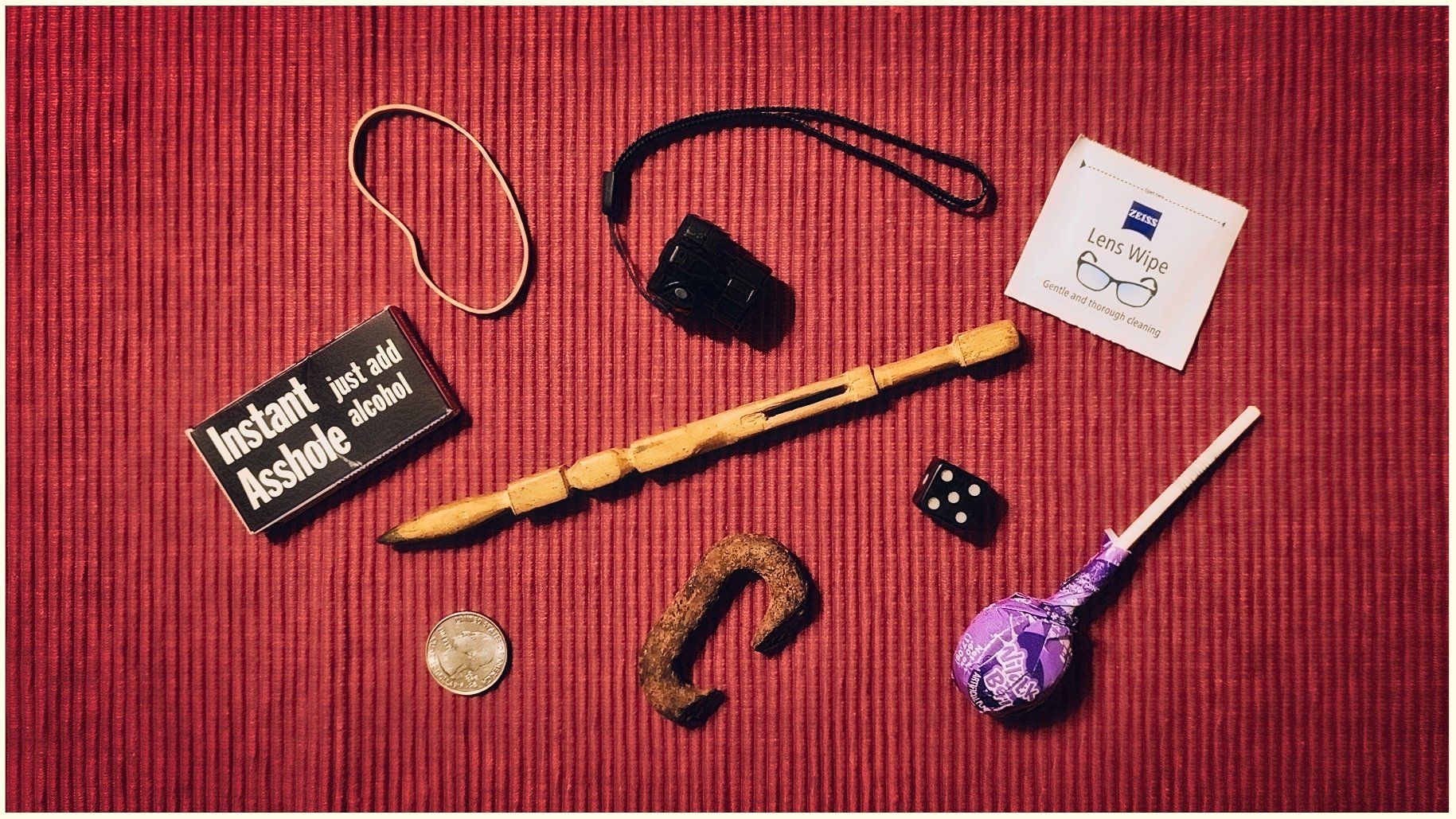
“Your mind is your invisible talisman. The letters PMA (positive mental attitude) are emblazoned on one side, and NMA (negative mental attitude) on the other. These are powerful forces.”
— W. Clement Stone
I am approaching a full year of complete abstinence from alcohol—nearly twelve months not just of sobriety, but of genuine, intentional recovery. Christmas of 2023 has passed, and I’m proud to say I moved through the holiday season with clear eyes and a steady spirit. No urges, no cravings. Instead, I recognized the people, places, and situations that once would have triggered escape or celebration, and I knew—fully—that I was in control of my thoughts, feelings, and behavior. So yes… yay for me.
This week’s reflection is about a small but meaningful part of my recovery: the growing collection of physical reminders that encourage me forward. Early in the year, during a counseling session, I shared with my therapist an idea sparked by an object I had found in a box from my past—something I had carved as a child with my first pocketknife. That simple piece of wood stirred memories of early creativity, long overshadowed by my years of substance use. With my therapist’s encouragement, I kept it visible on my desk during journaling and mindfulness practice.
Over time, I’ve gathered other objects that spark insight, symbolize lessons, or remind me of the journey I’m on. Here is my small collection—and the meaning each item holds:
· Wood Carving: A reminder of my early creative spirit—proof that creativity is part of who I’ve always been.
· A*Hole Gum: Picked up during an earlier recovery attempt as a joke; now a blunt reminder of truths I once avoided.
· Toy Camera: A symbol of my current creative passion—to see, capture, and share the beauty in the world.
· Dice: A reminder of life’s randomness. Some events we control, some we don’t—what matters is how we respond.
· Coin: A symbol of choice. Every action is a decision. Even not choosing is a choice.
· Chain Link: A broken, rusty link representing the chains of trauma and addiction that once bound me.
· Rubber Band: A symbol of flexibility—staying open to possibility instead of remaining trapped in rigid thinking.
· Lens Cleaner: A symbol of clarity—seeing the world, and myself, without the filters of fear or limiting beliefs.
· Sucker: A reminder that simple pleasures are fine. A piece of candy is okay—but I will never again reach for the poison of alcohol.
In the photo associated with this post, the items are laid out clearly for the viewer. Normally, they sit together in a small container on the edge of my desk. When journaling or reflecting, I sometimes glance at them and feel old memories rising or new ideas forming. These items carry no spiritual or ritual meaning—they are simply objects. But for me, they are powerful reminders of sobriety, growth, and the choices I make daily.
Next week, I’ll move safely through New Year’s and reach the one-year mark of true, continuous recovery. I feel confident. I feel steady. And I look forward to writing that post.
Recovery52 – Week 48 – Praise & Apologies
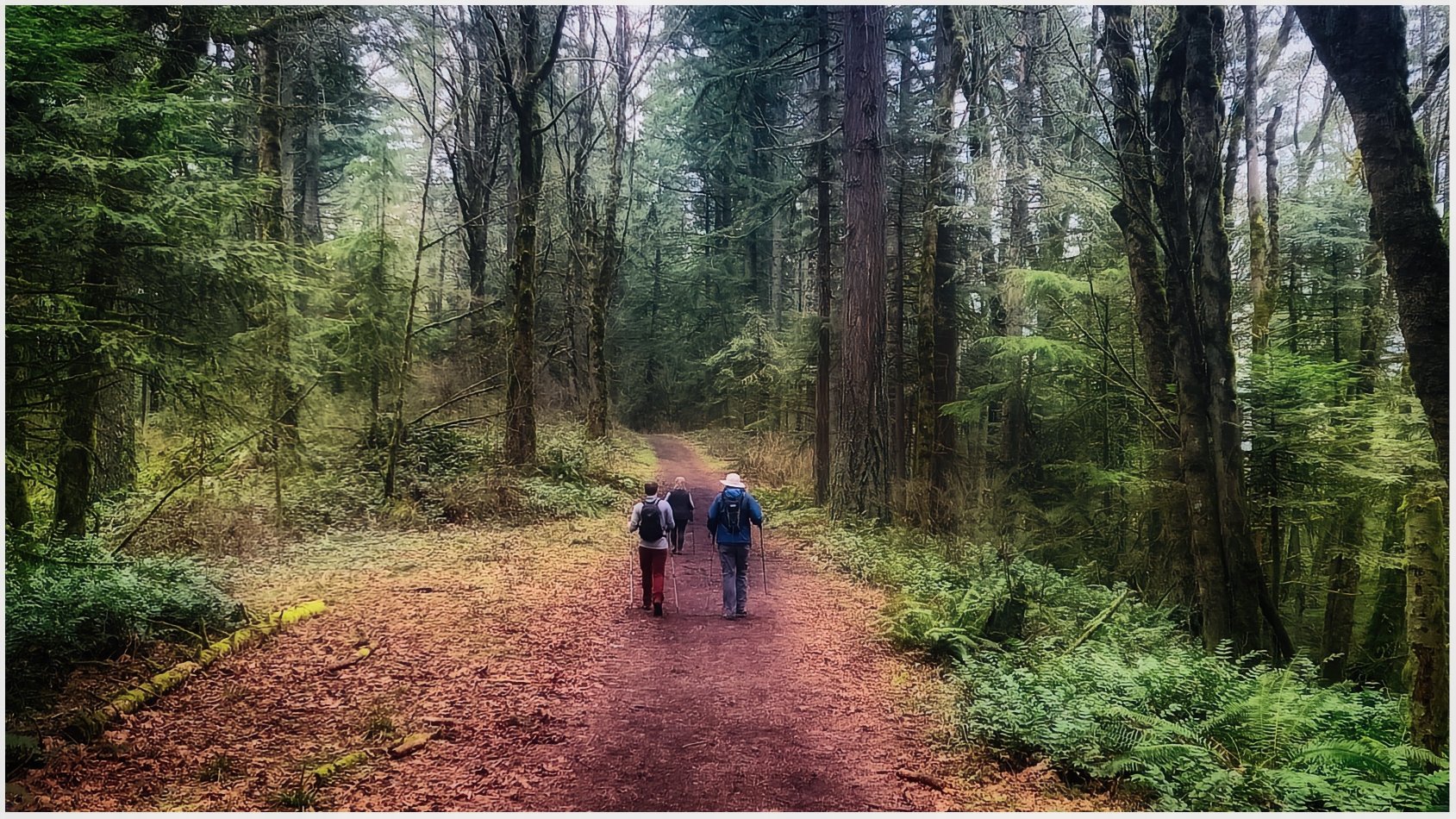
“Apologies aren’t meant to change the past, they are meant to change the future.”
— Kevin Hancock
Early in this project, while talking with a close friend about the emotional and physical traumas of my childhood, I shared a vow I made long before I had the words for it: I would never hit a woman or harm a child. Given what I had witnessed and endured, this vow felt like a core promise—a line I would never cross.
He responded with something that stayed with me: “You broke the cycle. You didn’t repeat the pattern.”
He was right. I take genuine pride in that. I am proud of the vow I made, and proud that I lived by it. But there is another side to the story. My adverse childhood experiences—and the vow not to become what I witnessed—pushed the pendulum in the opposite direction. In trying to protect the feelings of others, I avoided honesty when honesty was needed. To avoid emotional discomfort in myself, I numbed, hid, and shut down. And by doing so, I caused harm—not through violence, but through absence, dishonesty, withdrawal, and emotional unavailability.
My emotional immaturity and my habit of retreating from difficult feelings kept me from being fully present as a father, partner, and friend. My worldview often became cynical, dark, and closed. I put distance between myself and the people who cared about me, missing opportunities for connection, growth, and possibility.
So here I am now, recognizing that apologies are not just appropriate—they are necessary. I offer apologies to anyone who suffered as a result of my choices: missed commitments, poor decisions, emotional distance, and the failures in sobriety that pulled others into my struggles. My apologies extend to everyone affected by my addiction and avoidance. (For some, this echoes the spirit of Step Five in AA.)
But those closest to me—the ones who stood by me through the worst of it—deserve more than a written acknowledgment. They deserve my presence. They deserve sincerity. They deserve real, face-to-face apologies. These apologies cannot change the past, but they can help create a better future. I don’t expect forgiveness, but I am finally learning to forgive myself.
I opened this post by accepting praise for breaking a generational pattern. I want to close with acknowledgment of something else: I am proud of my recovery. I am proud of breaking the cycle. And I am proud of not repeating the patterns of lapse and relapse. In less than two weeks, I will reach a full year—not just of sobriety, but of genuine, transformative recovery. And I intend to keep moving forward.
Recovery52 – Week 47 – Fears and Trust

Seeking light on the storm.
“You are afraid of letting anyone get close.”
— My sister
This week’s quote isn’t from a book or a public figure. It came from my sister during a phone conversation: “You are afraid of letting anyone get close.” The moment she said it, I felt the truth of it. This is the issue I need to face more directly—one that underlies many of my fears, beliefs, and behaviors.
I’ve written in earlier posts about fear, limiting beliefs, distrust, and the patterns that shape how I relate to others. But this week clarified something essential: two core fears form the wall around me, protecting me from both real and imagined harm:
· If I allow others to get close, they may hurt me. Therefore, others can’t be trusted.
· If I get close to others, I may hurt them. Therefore, I can’t be trusted.
The first fear makes sense, given the traumatic experiences of my early childhood—events I’ve described in previous posts. Those moments shaped my negativity bias, my tendency to anticipate danger, and my ingrained distrust of others.
The second fear also makes sense. I can remember too many times when I disappointed people I cared about—holding back honesty, withdrawing emotionally, filtering my thoughts out of fear of rejection, abandonment, or triggering someone’s anger. In many ways, fear #2 loops right back into fear #1. Both reinforce each other.
And even now, part of me worries that I could stumble in my recovery. I’ve promised myself I won’t relapse again, but because I’ve failed before, a piece of me still questions whether I can fully trust that promise.
This is Week 47 of my 52-week commitment—over 90% of the way to my goal. If this were a quarter-mile race, I’d have about 130 feet left to run. I will cross the finish line. And then I will turn this sobriety race into a recovery marathon: steady, persistent, and forward-moving, mile after mile.
I’m deeply engaged in learning right now—recovery, psychology, CBT, critical thinking, attachment theory, neuroscience, Stoicism, Buddhism. Books, audiobooks, podcasts, videos, websites—each helping me make sense of my experiences. These insights support my recovery, but immersion can be exhausting without time to rest.
So I’m stopping here for today. Time for a nature walk with my camera. Time for quiet. Time to let my mind settle and reset before continuing this work.
Recovery52 – Week 46 – Seeking Truth

“All too often we’re filled with negative and limiting beliefs. We’re filled with doubt. We’re filled with guilt or with a sense of unworthiness. We have a lot of assumptions about the way the world is that are actually wrong.”
— Jack Canfield
In last week’s post, I committed to staying mindful when negative and limiting beliefs surface—to pause, reflect, identify their source, and question their truth and usefulness. My intention was, and still is, to challenge the beliefs that continue to influence me today.
On Saturday, I went for a walk at a local nature park. The sky was dark with threatening rain, and I hoped to capture a few photographs while also giving attention to my internal landscape. The photography went well. But as I walked, my inner world began to mirror the sky—darkening with memories of events that have shaped my perceptions and behaviors throughout my life.
In a prior post, I described several early childhood traumas that contributed to my fear-based responses—reactions that pushed me toward substance use when pain or confrontation felt overwhelming. Here are a few more formative events that reinforced rigid, black-and-white beliefs:
· As a young boy experiencing partial blindness and debilitating headaches, I traveled with my mom by bus to the city for a medical procedure. In the restroom at the bus station, a grizzled man approached me from behind, mumbling, and tried to push his hands down the front of my waistband. I froze, pushed him away, and he left when another person entered. I told no one. I felt shame, guilt, and a lingering fear that somehow I was to blame.
· In my sophomore year of high school, our English class read Truman Capote’s In Cold Blood and watched the film adaptation. Around the same time, we were assigned to write a news-style article, and I chose a local story about two teenage girls who had been murdered and left on a forest road. Immersing myself in those horrific accounts shaped my beliefs about justice and punishment, fueling a desire for swift, harsh consequences for “bad” men.
· September 11, 2001, was another turning point. The horror of the attacks and the extremism behind them shook me. Until then, I had paid little attention to world events. Suddenly, I wanted revenge. I became hyper-vigilant about news and politics, looking everywhere for confirmation of my outrage. I was swept up in online arguments, consumed by anger, and drinking heavily during that era.
That’s enough examples for now. These experiences shaped my worldview and contributed to my urge to numb, escape, and resist feeling difficult emotions. I can’t change any of them. But I can learn from them and commit to a better way forward.
My beliefs have deep roots. Simply recognizing their origins doesn’t transform them. I need to question whether my automatic responses and underlying assumptions serve me—or distort how I see the world, other people, and myself. To support this work, I’ve begun studying critical thinking. I hope it will help me identify and challenge the cognitive biases that darken my perception and keep old narratives alive.
I’ll close with an audiobook I’m currently listening to, one I expect will be helpful in this effort:
Critical Thinking: What You Should Have Been Taught About Decision-Making, Problem-Solving, Cognitive Biases, Logical Fallacies, and Winning Arguments — Jerrel Forman